
Archive

December 2025

Browsing

Nickel prices were stagnant in 2025, trading around US$15,000 per metric ton (MT) for much of the year.

The metal’s primary price motivation stemmed from persistent oversupply from Indonesian operations.

Overall, sentiment remained weak amid soft demand growth from the construction and manufacturing sectors, and declining interest in nickel as electric vehicle (EV) battery makers began to eye cheaper chemistries.

Nickel supply in 2026

The big question going into the new year is if nickel supply and demand will come into balance.

The most significant contributing factor over the last several years has been an abundance of supply from Indonesia, which has become the world’s top nickel producer.

The US Geological Survey estimates that full-year 2024 nickel production came in at 2.2 million MT, a staggering increase over the 800,000 MT it believes the nation produced in 2019.

In February 2025, the Indonesian government changed its quota system, effectively increasing nickel ore output to 298.5 million wet metric tons (WMT) from 271 million WMT in 2024. At the time, it said the increased production capacity was being limited to major production areas and was designed to reduce supply pressures.

The increase helped drive the amount of nickel sitting in exchange warehouses. Stockpiles at the London Metal Exchange (LME) had risen to 254,364 MT by the end of November, up from 164,028 MT at the start of 2025.

Meanwhile, the nickel price sank to US$14,295, toward the lower end of profitability for low-cost Indonesian miners.

The profitability question has raised the possibility of cuts — according to Shanghai Metal Market, the Indonesian government is proposing to cut nickel ore output to around 250 million MT in 2026. If the reduction comes to pass, it would mark a significant decline from the 379 million WMT laid out by Indonesia in 2025. Discussions on the final amount are ongoing, and the outlet states that it will be some time before the target is finalized.

“The global market is still forecast to remain in surplus — around 261,000 MT in 2026 — so further cuts would need to be significant to alter fundamentals,” she explained.

Additionally, there could be a wait-and-see approach as other new policies adopted by the Indonesian government in 2025 begin to take hold. The first, introduced in April, saw a shift from a flat 10 percent royalty to a more dynamic rate of 14 to 18 percent, depending on nickel prices. The second came in October, when the government cut the validity period of mining licenses from three years to one, providing the government greater oversight of production levels.

These prices, however, aren’t supportive of western producers, which began curtailing operations in 2024 when the LME average price was US$16,812 and reached US$21,000 in May of that year.

For her part, Manthy suggested that to get back to that range, there needs to be a more coordinated approach to constraining supply, and it may not make an immediate difference.

“To push prices to that range, cuts would need to be deep enough to erase most of the projected surplus. Given the scale — hundreds of thousands of MT — this seems unlikely without coordinated action. Even then, investor sentiment would probably require sustained prices above US$20,000 to materially improve producer attractiveness,” she said.

Nickel demand in 2026

The challenges faced by nickel go beyond oversupply; demand growth for the base metal is also soft.

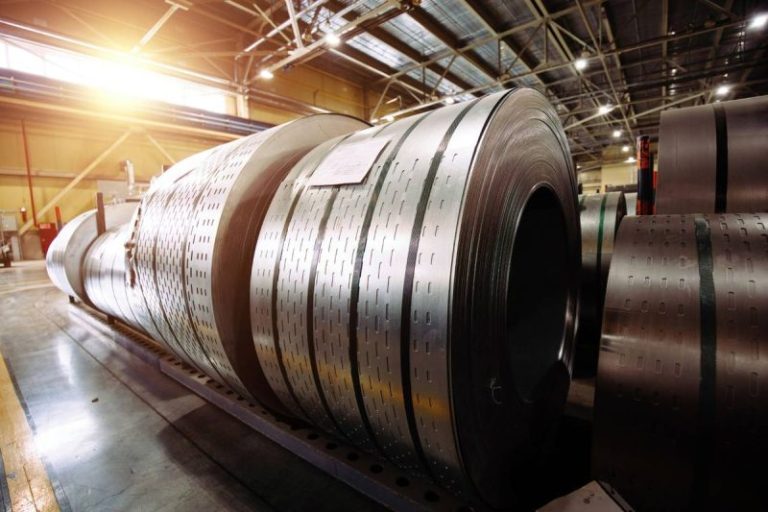
Nickel’s primary use case is in the production of stainless steel, much of it destined for the Chinese housing market, which has yet to recover from its collapse in 2020.

While the Chinese government tried to stabilize the market in 2024 and earlier in 2025, it has done little to reverse the downward trend. According to a CNBC report on December 2, November sales were down 36 percent from the same period in 2024, and declined 19 percent through the first 11 months of the year.

“China’s property sector weakness has weighed on stainless steel demand, which accounts for over 60 percent of global nickel consumption. Even with broader economic growth, this stagnation has kept nickel prices subdued. A property turnaround would help, but given the surplus outlook, price upside would likely be limited,” Manthey said.

Adding to nickel’s woes is soft growth from the EV market.

Much of the increase in nickel production over the last five years was to fuel the need for EV batteries, but more recently producers like Contemporary Amperex Technology (SZSE:300750,HKEX:3750), one of the world’s largest battery makers, have shifted chemistry to lithium-iron-phosphate (LFP).

Nickel-manganese-cobalt batteries had been seen as superior due to their higher energy density and longer range. But recent advances in LFP technology have erased that gap, with vehicles using the chemistry achieving ranges of over 750 kilometers. Additionally, LFP batteries are cheaper to produce and less volatile, making them safer.

According to a December 1 Reuters article, nickel battery demand rose 1 percent year-on-year in September, while LFP battery demand increased 7 percent. However, the news outlet notes that most of the nickel demand was likely driven more by a rapidly growing EV market than by the benefits of its chemistry.

Although Reuters also notes that nickel chemistry remains the dominant battery technology in western EV markets, that too comes with a caveat, especially in the US, where the elimination of the EV tax credit in September has cratered EV demand. While US EV sales reached a record 1.2 million through the first nine months of 2025, much of that was driven by consumers seeking to take advantage of the US$7,500 credit before it expired.

Early data from Cox Automotive analysis indicates that American EV sales are down 46 percent in Q4 from the third quarter, and 37 percent from the same period last year.

Against that backdrop, Ford Motor (NASDAQ:F) has scaled back its EV plans, taking a US$19.5 billion writedown, and will pivot to extended-range EVs — which use gas-powered engines to augment range — and hybrid cars. Similarly, in mid-December, the EU dropped its plans to ban the sale of all internal combustion engine light vehicles by 2035.

These policy changes likely aren’t good news for nickel watchers.

“Any slowdown in energy transition policies adds to bearish sentiment for battery metals, including nickel,” Manthey said.

Nickel price forecast for 2026

Manthey suggested that nickel prices will remain under pressure throughout 2026.

“We expect prices to struggle to hold above US$16,000 given the surplus. Upside risks hinge on unexpected supply disruptions or stronger-than-forecast stainless and battery demand, but sustained levels above US$19,000 look unlikely under current fundamentals. We see prices averaging US$15,250 in 2026,” she said.

That’s in line with the World Bank’s 2026 nickel price outlook of US$15,500, rising to US$16,000 in 2027.

The primary reason for these projections is the ongoing nickel market surplus.

While it didn’t make a price prediction, Russia’s Nornickel, one of the world’s largest nickel producers, suggests that the market will see a surplus of 275,000 MT of refined nickel in 2026.

Low prices will be a challenge for nickel producers and investors alike. Until there is a shift in market fundamentals, a rebound for nickel doesn’t appear to be in the cards in the short or even medium term.

Securities Disclosure: I, Dean Belder, hold no direct investment interest in any company mentioned in this article.


This post appeared first on investingnews.com

The S&P 500 ($SPX) just logged its fifth straight trading box breakout, which means that, of the five trading ranges the index has experienced since the April lows, all have been resolved to the upside.

How much longer can this last? That’s been the biggest question since the massive April 9 rally. Instead of assuming the market is due to roll over, it’s been more productive to track price action and watch for potential changes along the way. So far, drawdowns have been minimal, and breakouts keep occurring. Nothing in the price action hints at a lasting change — yet.

While some are calling this rally “historic,” we have a recent precedent. Recall that from late 2023 through early 2024, the index had a strong start and gave way to a consistent, steady trend.

From late October 2023 through March 2024, the S&P 500 logged seven consecutive trading box breakouts. That streak finally paused with a pullback from late March to early April, which, as we now know, was only a temporary hiccup. Once the bid returned, the S&P 500 went right back to carving new boxes and climbing higher.

New 52-Week Highs Finally Picking Up

If there’s been one gripe about this rally, it’s that the number of new highs within the index has lagged. As we’ve discussed before, among all the internal breadth indicators available, new highs almost always lag — that’s normal. What we really want to see is whether the number of new highs begins to exceed prior peaks as the market continues to rise, which it has, as shown by the blue line in the chart below.

As of Wednesday’s close, 100 S&P 500 stocks were either at new 52-week highs or within 3% of them. That’s a strong base. We expect this number to continue rising as the market climbs, especially if positive earnings reactions persist across sectors.

Even when we get that first day with 100+ S&P 500 stocks making new 52-week highs, though, it might not be the best time to initiate new longs.

The above chart shows that much needs to align for that many stocks to peak in unison, which has historically led to at least a short-term consolidation, if not deeper pullbacks — as highlighted in yellow. Every time is different, of course, but this is something to keep an eye on in the coming weeks.

Trend Check: GoNoGo Still “Go”

The GoNoGo Trend remains in bullish mode, with the recent countertrend signals having yet to trigger a greater pullback.

Active Bullish Patterns

We still have two live bullish upside targets of 6,555 and 6,745, which could be with us for a while going forward. For the S&P 500 to get there, it will need to form new, smaller versions of the trading boxes.

Failed Bearish Patterns

In the chart below, you can view a rising wedge pattern on the recent price action, the third since April. The prior two wedges broke down briefly and did not lead to a major downturn. The largest pullbacks in each case occurred after the S&P 500 dipped below the lower trendline of the pattern.

The deepest drawdown so far is 3.5%, which is not exactly a game-changer. Without downside follow-through, a classic bearish pattern simply can’t be formed, let alone be broken down from.

We’ll continue to monitor these formations as they develop because, at some point, that will change.

After peaking above US$20,000 per metric ton (MT) in May 2024, nickel prices have trended steadily downward.

Behind the numbers is a persistent oversupply driven by Indonesia’s high output, the world’s largest nickel producer.

At the same time, demand from China’s manufacturing and construction sectors, a traditional driver of stainless steel, has been weak as the country’s beleaguered real estate sector continues to find its footing.

Read on to learn what other key factors moved the nickel sector in 2025.

Nickel price in Q4

There wasn’t much change at the start of the quarter; the price was essentially trading in the US$15,000 to US$15,500 range, the same as it had since recovering from the post-liberation day tariff announcement rout in the base metals market in April that sent the price spiraling to a year-to-date low of US$14,150.

Nickel price, December 19, 2024, to December 18, 2025.

Chart via TradingEconomics.

However, cracks began to form at the end of October as it became clearer that the oversupply situation was likely to persist, pushing prices back below the US$15,000 mark by mid-November.

Prices for nickel rebounded in late November, but failed to break the US$15,000 again and slid toward a yearly low, reaching US$14,235 on December 15.

Oversupply continues to weigh on nickel

At the end of the year’s third quarter, the expectation was that nickel prices would carry momentum as the monsoon season arrived in the Philippines; however, despite seasonal declines in output, the market ‘s supply glut persisted, and prices continued to trend lower at the end of the period.

As of September 30, London Metal Exchange (LME) warehouses held 231,504 MT of nickel, and by November 28, stockpiles had grown to 254,364 MT, nearly 100,000 MT higher than the start of 2025.

According to a mid-December Shanghai Metals Market article, refined production decreased by 25,800 MT in November. Still, it was outpaced by inventory accumulation, as downstream demand remained soft.

On the demand side, stockpile buildups coincided with the traditional off-season for stainless steel producers, which accounts for 60 percent of total nickel demand, and weak end-use consumption led some producers to initiate output cuts. Additionally, Shanghai Metals Market notes that stainless demand was further impacted by the superior economics of recycled materials. The outlet also states that although production costs in Indonesia are lower than elsewhere, the price of nickel is rapidly approaching producers’ break-even point.

In February, the Indonesian government changed its quota system, increasing nickel ore output to 298.5 million wet metric tons from 271 million wet metric tons in 2024. The move from the top nickel producer was designed to alleviate supply pressures, with increased production limited to major production areas.

This was followed in October by a change to the length of time production quotas were valid, shortening it to one year from three years, and forcing miners to reapply for previously approved quotas for 2026 and 2027.

Changes were made to the application system after companies failed to meet environmental obligations, and companies will now have to submit proof they have the financial means to remediate land after operations are complete.

Adding to the metal’s woes at the end of the year is demand from the electric vehicle (EV) sector slipping as more battery producers pivot away from nickel in their chemistries, as cheaper lithium-iron-phosphate batteries improve efficiency.

For her part, Manthey, explained that everything has aligned for a bear market.

“LME stockpiles are at a four-year high, with Chinese and Indonesian cathode dominating,” she said, adding that growth in battery metals was slower than expected, and that demand for stainless steel was sluggish on the back of global weakness in manufacturing.

How did nickel perform for the rest of the year?

The rest of the year wasn’t much different for nickel.

The oversupply situation carried over from 2024, with Indonesian producers making up roughly 60 percent of the market. Likewise, curtailments continued among western producers as prices were unable to cover costs.

In April, the Indonesian government made a significant change to its royalty rates, hiking them to between 14 and 19 percent, depending on the nickel price. That’s up from the country’s previously imposed 10 percent flat rate, with a 2 percent royalty on nickel mattes destined for battery production.

As the second quarter began, base metal prices sank amid rising expectations of a global recession following US President Donald Trump’s “Liberation Day” tariff announcement on April 2.

Markets rebounded after their initial tariff plans were walked back, following a bond market squeeze that pushed 10 year treasury yields up by more than half a percentage point.

Nickel faced further pressures in July as the One Big Beautiful Bill was signed into law in the US, ending the federal EV tax credit, as well as other tax credits for expanding charging infrastructure. The change came into effect on September 30 and eliminated a US$7,500 rebate on the purchase of new EVs. Before the end of the tax credit, data showed that American EV sales reached a record 1.2 million through the first nine months of 2025, with the share for EVs climbing to 12 percent in Q3 as consumers made purchases ahead of the program’s end.

Q4 data shows EV sales have declined significantly since the tax credit expired, and interest in EVs has fallen by 20 percent. The fall caused Ford Motor (NASDAQ:F) to pull back on its EV plans and take a US$19.5 billion writedown.

Investor takeaway

Nickel prices continued on a downtrend in 2025, and expectations aren’t much different for the year ahead.

Until the metal see ssustained upward momentum, it’s unlikely that curtailed western operations will be restarted.

For experienced investors, this may offer an opportunity to enter a market closer to the bottom than the top. However, until there is a significant correction in supply and demand fundamentals, the nickel market won’t have much of a tailwind, leading to a riskier market, that may have a lengthy period before returns are realized, if at all.

Securities Disclosure: I, Dean Belder, hold no direct investment interest in any company mentioned in this article.

This post appeared first on investingnews.com

Here’s a quick recap of the crypto landscape for Friday (December 19) as of 9:00 pm UTC.

Get the latest insights on Bitcoin, Ether and altcoins, along with a round-up of key cryptocurrency market news.

Bitcoin and Ether price update

Bitcoin (BTC) was priced at US$88,004.97, up by 3.6 percent over 24 hours.

Bitcoin price performance, December 19, 2025.

Chart via TradingView

Ether (ETH) was priced at US$2,991.30, up by 7.2 percent over the last 24 hours.

Altcoin price update

  • XRP (XRP) was priced at US$1.91, up by 5.7 percent over 24 hours.
  • Solana (SOL) was trading at US$126.85, up by 7.6 percent over 24 hours.

Today’s crypto news to know

MetaPlanet boosts US expansion efforts

American depositary receipts of Bitcoin treasury company Metaplanet (TSE:3350,OTCQX:MPJPY) began trading on the OTC market under the ticker symbol MPJPY, replacing the previously unsponsored MTPLF ticker.

This step builds on earlier US expansions. The Tokyo-based company established a wholly owned subsidiary called Metaplanet Treasury in Miami, Florida, in May to handle Bitcoin accumulation and treasury operations with up to US$250 million in capital. The launch is intended to enhance US investor participation in MetaPlanet’s Bitcoin strategy.

Poland parliament approves MiCA-aligned crypto bill

Poland’s lower house of parliament, called the Sejm, approved a crypto asset market bill, overriding President Karol Nawrocki’s prior veto. It now heads to the Senate for review, where it potentially faces another veto.

Nawrocki vetoed the bill earlier in December, citing threats to civil liberties like easy website blocks. Prime Minister Donald Tusk’s government resubmitted the bill, unchanged. It passed with 241 votes.

The bill aligns Poland with the EU’s MiCA regulation by designating the Financial Supervision Authority to oversee crypto exchanges, impose sanctions and introduce criminal liability for offenses.

Senate confirms Selig as CFTC chair

The US Senate has confirmed Mike Selig as the next chair of the Commodity Futures Trading Commission (CFTC), bringing permanent leadership back to an agency that has operated for months in near limbo.

Selig’s confirmation passed 53 to 43 as part of a broader package of federal appointments. The CFTC had been functioning with a single commissioner, Acting Chair Caroline Pham, after multiple resignations hollowed out the five member panel. While Pham kept the agency operational, the lack of a Senate-confirmed chair constrained long-term planning, staffing and coordination with other regulators.

That gap was especially acute as lawmakers debated expanding the CFTC’s role in overseeing spot crypto markets.

Clarity Act heads for Senate markup in January

The Digital Asset Market Clarity Act is set to enter Senate markup in January, according to David Sacks, White House crypto and artificial intelligence (AI) adviser, putting the bill on a formal path toward passage.

‘We had a great call today with Chairmen @SenatorTimScott and @JohnBoozman who confirmed that a markup for Clarity is coming in January. Thanks to their leadership, as well as @RepFrenchHill and @CongressmanGT in the House, we are closer than ever to passing the landmark crypto market structure legislation that President Trump has called for,’ Sacks posted on X. ‘We look forward to finishing the job in January!’

Senate Committee on Banking Chair Tim Scott and Senate Agriculture, Nutrition and Forestry Committee Chair John Boozman have agreed on the timeline.

The bill, which cleared the House earlier this year, aims to settle long-running jurisdiction disputes by spelling out when a token is a security versus a commodity. Lawmakers are expected to focus amendments on asset classification tests, investor protection standards and how quickly platforms must register under the new regime.

Another key issue will be how the US Securities and Exchange Commission and CFTC coordinate oversight during the transition period. If the schedule holds, Congress could finalize a reconciled version later during the year.

Bybit re-enters UK market after two years

Crypto exchange Bybit has resumed operations in the UK after a two year absence triggered by tighter rules on crypto marketing and promotions. The platform has restarted spot trading with 100 pairs, using a compliance structure designed to meet the Financial Conduct Authority’s financial promotion standards.

Rather than holding its own UK authorization, Bybit is operating under an arrangement with London-based exchange Archax, which is licensed to approve crypto promotions for unauthorised firms.

This route has previously been used by other major exchanges seeking access to British users.

Securities Disclosure: I, Meagen Seatter, hold no direct investment interest in any company mentioned in this article.

Securities Disclosure: I, Giann Liguid, hold no direct investment interest in any company mentioned in this article.

This post appeared first on investingnews.com

The S&P 500 ($SPX) just logged its fifth straight trading box breakout, which means that, of the five trading ranges the index has experienced since the April lows, all have been resolved to the upside.

How much longer can this last? That’s been the biggest question since the massive April 9 rally. Instead of assuming the market is due to roll over, it’s been more productive to track price action and watch for potential changes along the way. So far, drawdowns have been minimal, and breakouts keep occurring. Nothing in the price action hints at a lasting change — yet.

While some are calling this rally “historic,” we have a recent precedent. Recall that from late 2023 through early 2024, the index had a strong start and gave way to a consistent, steady trend.

From late October 2023 through March 2024, the S&P 500 logged seven consecutive trading box breakouts. That streak finally paused with a pullback from late March to early April, which, as we now know, was only a temporary hiccup. Once the bid returned, the S&P 500 went right back to carving new boxes and climbing higher.

New 52-Week Highs Finally Picking Up

If there’s been one gripe about this rally, it’s that the number of new highs within the index has lagged. As we’ve discussed before, among all the internal breadth indicators available, new highs almost always lag — that’s normal. What we really want to see is whether the number of new highs begins to exceed prior peaks as the market continues to rise, which it has, as shown by the blue line in the chart below.

As of Wednesday’s close, 100 S&P 500 stocks were either at new 52-week highs or within 3% of them. That’s a strong base. We expect this number to continue rising as the market climbs, especially if positive earnings reactions persist across sectors.

Even when we get that first day with 100+ S&P 500 stocks making new 52-week highs, though, it might not be the best time to initiate new longs.

The above chart shows that much needs to align for that many stocks to peak in unison, which has historically led to at least a short-term consolidation, if not deeper pullbacks — as highlighted in yellow. Every time is different, of course, but this is something to keep an eye on in the coming weeks.

Trend Check: GoNoGo Still “Go”

The GoNoGo Trend remains in bullish mode, with the recent countertrend signals having yet to trigger a greater pullback.

Active Bullish Patterns

We still have two live bullish upside targets of 6,555 and 6,745, which could be with us for a while going forward. For the S&P 500 to get there, it will need to form new, smaller versions of the trading boxes.

Failed Bearish Patterns

In the chart below, you can view a rising wedge pattern on the recent price action, the third since April. The prior two wedges broke down briefly and did not lead to a major downturn. The largest pullbacks in each case occurred after the S&P 500 dipped below the lower trendline of the pattern.

The deepest drawdown so far is 3.5%, which is not exactly a game-changer. Without downside follow-through, a classic bearish pattern simply can’t be formed, let alone be broken down from.

We’ll continue to monitor these formations as they develop because, at some point, that will change.

The silver price was on the rise once again this week — it surged past the US$67 per ounce level on Friday (December 19), hitting a new record before pulling back.

As for gold, it spent much of the period around the US$4,330 per ounce level, although it rose as high as US$4,360 on Thursday (December 18), approaching its own all-time high.

Investors were eyeing November US consumer price index (CPI) data, which came out on Thursday. It was up 2.7 percent year-on-year, while core CPI was measured at 2.6 percent.

Those figures were quite a bit lower than analysts’ estimates, and data collection issues caused by the US government shutdown have left market participants questioning the results.

Notably, Bureau of Labor Statistics officials had to make ‘certain methodological assumptions’ because the October CPI report was canceled entirely. The bureau also started November data collection later than usual, driving concerns about a rebound in numbers for December.

US jobs data for both October and November came out this week as well, showing that the unemployment rate for last month rose to 4.6 percent, the highest since 2021.

While 64,000 jobs were added in November, 105,000 were lost in October, and revisions took 33,000 jobs away from the months of August and September.

Outside US economic data, it’s worth noting that for silver there’s still a lot of focus on behind-the-scenes actions that could be impacting the price.

Here’s what Substack newsletter writer John Rubino had to say about that:

‘A lot of the discontinuities that we’re seeing in the silver market right now are due to the fact that the big exchanges like Comex may not have enough silver to satisfy the demands of futures contract holders.

‘In other words, there are a lot more people out there with long futures contracts that could come in and demand silver than there is silver to satisfy that demand. And the number of people who are standing for delivery on futures contracts is rising, and the amount of silver in these exchanges is shrinking.’

Bullet briefing — Platinum beats gold, copper hits new record

Platinum price on the move

I’d be remiss if I didn’t also take a moment to mention platinum.

While gold and silver have been making headlines, platinum’s 2025 rise has been quiet, but significant — it’s up over 100 percent year-to-date and nearly hit US$1,980 per ounce this week.

Platinum is somewhat similar to silver in that they both have precious and industrial sides, and they’ve both seen persistent deficits in recent years.

Platinum’s deficit has definitely helped it rise this year, but looking forward to next year the World Platinum Investment Council is expecting a balanced market. When I saw that, I wondered if that would mean lower prices in 2026. But that may not necessarily be the case.

Edward Sterck said there are a couple of nuances in the council’s outlook — for example, it’s anticipating profit taking from exchange-traded funds, but if that doesn’t happen, then the platinum deficit may persist. He also noted that balance in 2026 wouldn’t erase years of deficits:

‘A balanced market doesn’t solve for the fact we’ve had three years of deficits. It doesn’t in any way, I suppose, rebuild aboveground stocks. And it’s the shortage of aboveground stocks that seems to be one of the major catalysts behind this price action and behind the market tightness.’

Copper price hits new high

It’s not only precious metals that have been hitting new highs this year.

The price of copper has been climbing as well, hitting a new all-time high of close to US$12,000 per metric ton last week on the London Metal Exchange.

It’s pulled back slightly since then, but market watchers agree the copper outlook remains strong as rising demand meets constrained supply. In fact, I’ve been asking experts what they think the top-performing asset of next year will be, and copper has been a popular pick.

Lobo Tiggre of IndependentSpeculator.com chose the base metal as his highest-confidence trade of 2025, and he said he’s sticking with it next year.

Here’s what he had to say about copper:

‘Top pick for 2026 is copper. Similar reasons to 2025 —the copper price has been kicked around, up and down by what I think of as sort of extraneous issues. But the fundamentals mean the demand scenario just looks phenomenal, and the supply has been really constrained.’

Securities Disclosure: I, Charlotte McLeod, hold no direct investment interest in any company mentioned in this article.

This post appeared first on investingnews.com

We also break down next week’s catalysts to watch to help you prepare for the week ahead.

In this article:

    This week’s tech sector performance

    US stocks advanced this week amid key economic data releases, with tech leading gains after Micron Technology’s (NASDAQ:MU) results release and easing artificial intelligence (AI) sector pressures.

    The S&P 500 (INDEXSP:.INX) rose 0.02 percent on the week, closing Friday (December 19) at 6,834.5.

    However, tech stock losses earlier in the week kept gains in check. The Nasdaq Composite (INDEXNASDAQ:.IXIC) lost 0.1 percent for the week to close at 23,307.62 on Friday.

    3 tech stocks moving markets this week

    1. Micron Technology (NASDAQ:MU)

    Micron Technology reported earnings for its first fiscal quarter of 2026 on Thursday (December 18), showing strong results driven by surging high-bandwidth memory sales for AI data centers

    Revenue reached US$13.64 billion, up 93 percent from last year and higher than the company’s September revenue projection of US$12.8 billion. Adjusted earnings per share were US$4.78, beating estimates of US$3.95. The company generated strong free cashflow and declared a US$0.115 per share dividend payable on January 14, 2026.

    Looking ahead, Micron adjusted its profit guidance for the upcoming quarter to US$8.42 per share, higher than Wall Street’s US$4.78 consensus, due to continued AI boom momentum.

    Investors responded to the results by sending Micron shares up 10 percent post-earnings. Momentum carried into Friday’s trading session, spilling over into other tech stocks, which have come under pressure in recent weeks over lofty valuations and funding concerns. The company ended the week 0.58 percent higher.

    2. Trump Media & Technology Group (NASDAQ:DJT)

    Trump Media & Technology Group rose nearly 30 percent before Thursday’s opening bell after the company announced plans to merge with fusion power company TAE Technologies.

    The all-stock deal is reportedly valued at more than US$6 billion. Devin Nunes, chair and chief executive of Trump Media, and Dr. Michl Binderbauer, CEO and director at TAE, are set to serve as co-CEOs.

    TAE is a private company with backing from Alphabet (NASDAQ:GOOGL) and other companies. The merger is slated to create one of the first publicly traded nuclear fusion companies. “We’re taking a big step forward toward a revolutionary technology that will cement America’s global energy dominance for generations,“ Nunes said.

    Shares of Trump Media closed the week with a gain of 39.53 percent.

    3. Oracle (NYSE:ORCL)

    Oracle shares dropped 5.4 percent on Wednesday (December 17) after a Financial Times report claimed data center investor Blue Owl Capital pulled out of a US$10 billion financing round for one of the AI data centers Oracle is constructing for OpenAI in Michigan. Talks reportedly stalled due to concerns over project delays, tougher debt terms, Oracle’s rising debt load and lease arrangements, per sources cited by the news outlet.

    Oracle disputed the report’s implications, stating that Michigan negotiations are “on schedule” without Blue Owl.

    The company said its project development partner, Related Digital, has chosen “the best equity partner from a competitive group of options, which in this instance was not Blue Owl.” Still, the company finished the week with its share price ahead by 2.18 percent as tech stocks staged an end-of-year comeback.

    Oracle, Micron Technology and Trump Media performance, December 15 to 19, 2025.

    Chart via Google Finance.

    Top tech news of the week

                Tech ETF performance

                Tech exchange-traded funds (ETFs) track baskets of major tech stocks, meaning their performance helps investors gauge the overall performance of the niches they cover.

                This week, the iShares Semiconductor ETF (NASDAQ:SOXX) declined by 0.94 percent, while the Invesco PHLX Semiconductor ETF (NASDAQ:SOXQ) saw a loss of 0.66 percent.

                The VanEck Semiconductor ETF (NASDAQ:SMH) also decreased by 0.61 percent.

                Tech news to watch next week

                Markets will be closed mid-week next week, with low trading volumes likely keeping movement calm.

                Watch for year-end selling in tech stocks, a potential rotation into safer sectors and light data like factory orders and home sales reports. Any comments on future interest rates could move markets somehwat, but expect mostly flat trading unless big news like policy changes breaks through.

                Securities Disclosure: I, Meagen Seatter, hold no direct investment interest in any company mentioned in this article.

                This post appeared first on investingnews.com

                Trump Media & Technology will merge with a fusion power company in an all-stock deal that the companies said Thursday is valued at more than $6 billion.

                Devin Nunes, the Republican congressman who resigned in 2021 to become the CEO of Trump Media, will be co-CEO of the new company with TAE Technologies CEO Michl Binderbauer.

                Shares of Trump Media & Technology, the parent company of President Donald Trump’s Truth Social media platform, have tumbled 70% this year but jumped 20% before the opening bell Thursday.

                TAE is a private company and the merger with Trump Media would create one of the first publicly traded nuclear fusion companies.

                “We’re taking a big step forward toward a revolutionary technology that will cement America’s global energy dominance for generations,” Nunes said in a prepared statement.

                TAE focuses on nuclear fusion, a technology that combines two light atomic nuclei to form a single heavier one. It releases enormous amount of energy, a process that occurs on the sun and other stars, according to the United Nation’s International Atomic Energy Agency.

                TAE and Trump Media shareholders will each own approximately 50% of the combined company.

                The companies say the transaction values each TAE common stock at $53.89 per share.

                At closing, Trump Media & Technology Group will be the holding company for Truth Social and TAE, along with its subsidiaries TAE Power Solutions and TAE Life Sciences.

                This post appeared first on NBC NEWS

                The S&P 500 ($SPX) just logged its fifth straight trading box breakout, which means that, of the five trading ranges the index has experienced since the April lows, all have been resolved to the upside.

                How much longer can this last? That’s been the biggest question since the massive April 9 rally. Instead of assuming the market is due to roll over, it’s been more productive to track price action and watch for potential changes along the way. So far, drawdowns have been minimal, and breakouts keep occurring. Nothing in the price action hints at a lasting change — yet.

                While some are calling this rally “historic,” we have a recent precedent. Recall that from late 2023 through early 2024, the index had a strong start and gave way to a consistent, steady trend.

                From late October 2023 through March 2024, the S&P 500 logged seven consecutive trading box breakouts. That streak finally paused with a pullback from late March to early April, which, as we now know, was only a temporary hiccup. Once the bid returned, the S&P 500 went right back to carving new boxes and climbing higher.

                New 52-Week Highs Finally Picking Up

                If there’s been one gripe about this rally, it’s that the number of new highs within the index has lagged. As we’ve discussed before, among all the internal breadth indicators available, new highs almost always lag — that’s normal. What we really want to see is whether the number of new highs begins to exceed prior peaks as the market continues to rise, which it has, as shown by the blue line in the chart below.

                As of Wednesday’s close, 100 S&P 500 stocks were either at new 52-week highs or within 3% of them. That’s a strong base. We expect this number to continue rising as the market climbs, especially if positive earnings reactions persist across sectors.

                Even when we get that first day with 100+ S&P 500 stocks making new 52-week highs, though, it might not be the best time to initiate new longs.

                The above chart shows that much needs to align for that many stocks to peak in unison, which has historically led to at least a short-term consolidation, if not deeper pullbacks — as highlighted in yellow. Every time is different, of course, but this is something to keep an eye on in the coming weeks.

                Trend Check: GoNoGo Still “Go”

                The GoNoGo Trend remains in bullish mode, with the recent countertrend signals having yet to trigger a greater pullback.

                Active Bullish Patterns

                We still have two live bullish upside targets of 6,555 and 6,745, which could be with us for a while going forward. For the S&P 500 to get there, it will need to form new, smaller versions of the trading boxes.

                Failed Bearish Patterns

                In the chart below, you can view a rising wedge pattern on the recent price action, the third since April. The prior two wedges broke down briefly and did not lead to a major downturn. The largest pullbacks in each case occurred after the S&P 500 dipped below the lower trendline of the pattern.

                The deepest drawdown so far is 3.5%, which is not exactly a game-changer. Without downside follow-through, a classic bearish pattern simply can’t be formed, let alone be broken down from.

                We’ll continue to monitor these formations as they develop because, at some point, that will change.