

Archive

January 8, 2026

Browsing

The S&P 500 ($SPX) just logged its fifth straight trading box breakout, which means that, of the five trading ranges the index has experienced since the April lows, all have been resolved to the upside.

How much longer can this last? That’s been the biggest question since the massive April 9 rally. Instead of assuming the market is due to roll over, it’s been more productive to track price action and watch for potential changes along the way. So far, drawdowns have been minimal, and breakouts keep occurring. Nothing in the price action hints at a lasting change — yet.

While some are calling this rally “historic,” we have a recent precedent. Recall that from late 2023 through early 2024, the index had a strong start and gave way to a consistent, steady trend.

From late October 2023 through March 2024, the S&P 500 logged seven consecutive trading box breakouts. That streak finally paused with a pullback from late March to early April, which, as we now know, was only a temporary hiccup. Once the bid returned, the S&P 500 went right back to carving new boxes and climbing higher.

New 52-Week Highs Finally Picking Up

If there’s been one gripe about this rally, it’s that the number of new highs within the index has lagged. As we’ve discussed before, among all the internal breadth indicators available, new highs almost always lag — that’s normal. What we really want to see is whether the number of new highs begins to exceed prior peaks as the market continues to rise, which it has, as shown by the blue line in the chart below.

As of Wednesday’s close, 100 S&P 500 stocks were either at new 52-week highs or within 3% of them. That’s a strong base. We expect this number to continue rising as the market climbs, especially if positive earnings reactions persist across sectors.

Even when we get that first day with 100+ S&P 500 stocks making new 52-week highs, though, it might not be the best time to initiate new longs.

The above chart shows that much needs to align for that many stocks to peak in unison, which has historically led to at least a short-term consolidation, if not deeper pullbacks — as highlighted in yellow. Every time is different, of course, but this is something to keep an eye on in the coming weeks.

Trend Check: GoNoGo Still “Go”

The GoNoGo Trend remains in bullish mode, with the recent countertrend signals having yet to trigger a greater pullback.

Active Bullish Patterns

We still have two live bullish upside targets of 6,555 and 6,745, which could be with us for a while going forward. For the S&P 500 to get there, it will need to form new, smaller versions of the trading boxes.

Failed Bearish Patterns

In the chart below, you can view a rising wedge pattern on the recent price action, the third since April. The prior two wedges broke down briefly and did not lead to a major downturn. The largest pullbacks in each case occurred after the S&P 500 dipped below the lower trendline of the pattern.

The deepest drawdown so far is 3.5%, which is not exactly a game-changer. Without downside follow-through, a classic bearish pattern simply can’t be formed, let alone be broken down from.

We’ll continue to monitor these formations as they develop because, at some point, that will change.
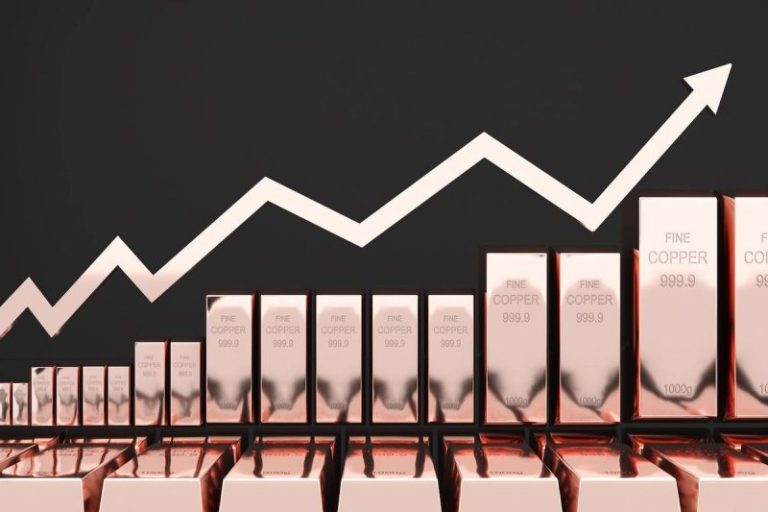

The copper price climbed to a fresh record on Tuesday (January 6), with persistent supply disruptions and trade uncertainty pushing the metal to a nearly 30 percent rally since October.

Benchmark three month copper on the London Metal Exchange (LME) rose as much as 3.1 percent in early trading to an all‑time high of US$13,387.50 per metric ton before settling slightly lower, but still above US$13,200.

The jump marks another milestone in a rally that first saw copper breach US$12,000 late in December last year.

Copper is widely used across the industrial economy, from construction and power infrastructure to electric vehicles and data centers that support artificial intelligence growth. Analysts attribute the gains to a combination of production setbacks at major mines and heightened concerns that prospective US trade tariffs could further disrupt flows.

Large copper-mining operations such as Freeport-McMoRan’s (NYSE:FCX) Grasberg complex in Indonesia have faced challenges since last year, while a strike at Capstone Copper’s (TSX:CS,ASX:CSC,OTC Pink:CSCCF) Mantoverde mine in Chile has reduced output prospects in one of the world’s top copper‑producing nations.

The threat of new tariffs under the Trump administration has also shaped expectations. Traders have moved to ship refined copper into the US ahead of any potential levies, tightening supply elsewhere. Furthermore, data show copper stocks in Comex warehouses have jumped to more than 450,000 metric tons, well above last year’s levels.

Copper outlook for 2026

Market watchers expect many of the forces that drove copper through 2025 to persist.

Supply constraints are expected to remain acute this year as aging mines and capacity shortfalls weigh on availability. New projects such as Arizona Sonoran Copper Company’s (TSX:ASCU,OTCQX:ASCUF) Cactus project and the long‑anticipated Resolution mine in the US are still years from significant output.

Copper demand is projected to grow as the global energy transition accelerates.

“A huge amount of this tightness has to do with US tariff concerns,” she said.

China, the world’s largest copper consumer, is also shaping the outlook. Despite weakness in its property sector, the country posted economic growth and is expected to prioritize copper‑intensive sectors under its new five year plan.

Longer‑term projections from industry groups suggest structural demand growth will outpace supply additions.

A UN report estimates that copper demand could rise 40 percent by 2040, requiring substantial investment and new mines just to keep pace. Likewise, Wood Mackenzie forecasts that copper demand will increase 24 percent by 2035, while the International Copper Study Group predicts a refined copper deficit of 150,000 metric tons in 2026 alone.

Securities Disclosure: I, Giann Liguid, hold no direct investment interest in any company mentioned in this article.

This post appeared first on investingnews.com

Alain Corbani, head of mining at Montbleu Finance and manager of the Global Gold and Precious Fund, sees the gold price reaching US$5,000 per ounce in the near term.

He sees real interest rates and the US dollar as the key factors to watch, but noted that other elements are also adding tailwinds.

Securities Disclosure: I, Charlotte McLeod, hold no direct investment interest in any company mentioned in this article.

This post appeared first on investingnews.com