

Archive

January 11, 2026

Browsing

The S&P 500 ($SPX) just logged its fifth straight trading box breakout, which means that, of the five trading ranges the index has experienced since the April lows, all have been resolved to the upside.

How much longer can this last? That’s been the biggest question since the massive April 9 rally. Instead of assuming the market is due to roll over, it’s been more productive to track price action and watch for potential changes along the way. So far, drawdowns have been minimal, and breakouts keep occurring. Nothing in the price action hints at a lasting change — yet.

While some are calling this rally “historic,” we have a recent precedent. Recall that from late 2023 through early 2024, the index had a strong start and gave way to a consistent, steady trend.

From late October 2023 through March 2024, the S&P 500 logged seven consecutive trading box breakouts. That streak finally paused with a pullback from late March to early April, which, as we now know, was only a temporary hiccup. Once the bid returned, the S&P 500 went right back to carving new boxes and climbing higher.

New 52-Week Highs Finally Picking Up

If there’s been one gripe about this rally, it’s that the number of new highs within the index has lagged. As we’ve discussed before, among all the internal breadth indicators available, new highs almost always lag — that’s normal. What we really want to see is whether the number of new highs begins to exceed prior peaks as the market continues to rise, which it has, as shown by the blue line in the chart below.

As of Wednesday’s close, 100 S&P 500 stocks were either at new 52-week highs or within 3% of them. That’s a strong base. We expect this number to continue rising as the market climbs, especially if positive earnings reactions persist across sectors.

Even when we get that first day with 100+ S&P 500 stocks making new 52-week highs, though, it might not be the best time to initiate new longs.

The above chart shows that much needs to align for that many stocks to peak in unison, which has historically led to at least a short-term consolidation, if not deeper pullbacks — as highlighted in yellow. Every time is different, of course, but this is something to keep an eye on in the coming weeks.

Trend Check: GoNoGo Still “Go”

The GoNoGo Trend remains in bullish mode, with the recent countertrend signals having yet to trigger a greater pullback.

Active Bullish Patterns

We still have two live bullish upside targets of 6,555 and 6,745, which could be with us for a while going forward. For the S&P 500 to get there, it will need to form new, smaller versions of the trading boxes.

Failed Bearish Patterns

In the chart below, you can view a rising wedge pattern on the recent price action, the third since April. The prior two wedges broke down briefly and did not lead to a major downturn. The largest pullbacks in each case occurred after the S&P 500 dipped below the lower trendline of the pattern.

The deepest drawdown so far is 3.5%, which is not exactly a game-changer. Without downside follow-through, a classic bearish pattern simply can’t be formed, let alone be broken down from.

We’ll continue to monitor these formations as they develop because, at some point, that will change.

We also break down next week’s catalysts to watch to help you prepare for the week ahead.

In this article:

    This week’s tech sector performance

    Tech markets spent the first full week of 2026 responding to headlines out of the Consumer Electronics Show (CES) in Las Vegas, where semiconductor and artificial intelligence (AI) announcements helped drive Nasdaq Composite (INDEXNASDAQ:.IXIC) momentum. This enthusiasm pushed the index to a fresh record midweek before a bout of profit taking and renewed concerns weighed on sentiment heading into Friday (January 9).

    The Nasdaq finished the week up 0.95 percent from Monday’s (January 5) open, powered by gains in memory and storage names like Micron Technology (NASDAQ:MU) and Western Digital (NASDAQ:WDC) after upbeat commentary on next-generation data infrastructure. However, the rally faded as investors rotated into defensive stocks after US President Donald Trump proposed a US$1.5 trillion “Dream Military” budget.

    Labor market indicators for the week suggest a continued, gradual cooling in the American job market, supporting the case for future US Federal Reserve interest rate cuts.

    North of the border, Canada’s S&P/TSX Composite Index (INDEXTSI:OSPTX) retreated after briefly hitting a record, mirroring the US market’s rotation in the second half of the week, weighed down by Venezuela oil fears.

    3 tech stocks moving markets this week

    1. Micron Technology (NASDAQ:MU)

    Shares of Micron Technology rose 0.12 percent on Monday after the company provided an investor update confirming strong demand for its high-bandwidth memory, critical for AI GPUs, through 2026.

    Comments on storage shortages at CES amplified gains on Tuesday, driving an 8.25 percent advance for Micron that day alongside additional memory stocks. The company saw a 6.14 percent weekly gain.

    2. Lockheed Martin (NYSE:LMT)

    Lockheed Martin jumped by as much as 2.06 percent on Thursday (January 8) after Trump’s Truth Social post prompted an investor rotation to defensive tech stocks.

    3. SanDisk (NASDAQ:SNDK)

    Sandisk, a company focused on NAND flash, SSDs and memory cards for consumer and AI data center use, jumped as much as 27.57 percent on Tuesday as comments at CES from NVIDIA (NASDAQ:NVDA) and Samsung Electronics (KRX:005930,OTCPL:SSNLF) executives reignited concerns of forthcoming price increases for NAND flash memory.

    SanDisk, Lockheed Martin and Micron Technology performance, January 5 to 9, 2026.

    Chart via Google Finance.

    Top tech news of the week

      • Huang also announced that NVIDIA’s new AI server racks will not require outside cooling, a revelation that caused the stocks of cooling equipment suppliers, such as Modine Manufacturing (NYSE:MOD) and Johnson Controls International (NYSE:JCI), to fall.

                      Tech ETF performance

                      Tech exchange-traded funds (ETFs) track baskets of major tech stocks, meaning their performance helps investors gauge the overall performance of the niches they cover.

                      This week, the iShares Semiconductor ETF (NASDAQ:SOXX) advanced by 2.47 percent, while the Invesco PHLX Semiconductor ETF (NASDAQ:SOXQ) saw a gain of 1.45 percent.

                      The VanEck Semiconductor ETF (NASDAQ:SMH) also increased by 1.98 percent.

                      Tech news to watch next week

                      Next week will bring bank earnings, starting with JPMorgan Chase (NYSE:JPM) on January 12, and Bank of America (NYSE:BAC) on January 15. January 15 will also bring the latest quarterly results from Taiwan Semiconductor Manufacturing Company (NYSE:TSM).

                      US producer price index data will hit on January 14, testing Fed interest rate cut bets, while Micron is set to break ground on its US$100 billion New York mega-fab on January 16.

                      Securities Disclosure: I, Meagen Seatter, hold no direct investment interest in any company mentioned in this article.

                      This post appeared first on investingnews.com

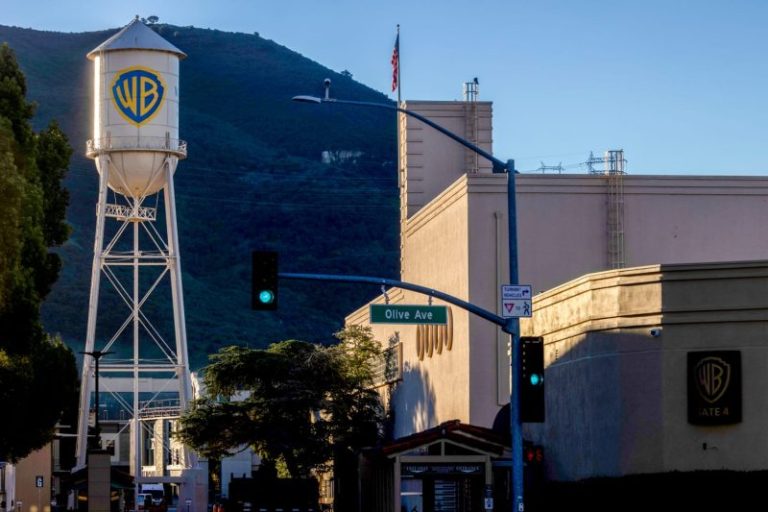
                      Warner Bros. Discovery on Wednesday rejected Paramount Skydance’s amended takeover offer, the latest in a series of rejections in David Ellison’s pursuit of the streaming and cable giant.

                      The media company said it remains committed to the $82.7 billion deal it reached in December to sell its streaming service, studio and HBO cable channel to Netflix.

                      ‘The Board unanimously determined that the Paramount’s latest offer remains inferior to our merger agreement with Netflix across multiple key areas,’ Warner Bros. Discovery Chairman Samuel Di Piazza said in a statement.

                      ‘Paramount’s offer continues to provide insufficient value,’ he continued.

                      In a letter to shareholders, Di Piazza wrote that Paramount Skydance’s offer carries ‘significant costs, risks and uncertainties as compared to the Netflix merger.’ The way the Paramount deal is structured creates a ‘lack of certainty’ about its finalization, he added.

                      Di Piazza adds in the letter that if the company were to agree to the Paramount merger and it failed to close, it would result in a ‘potentially considerable value destruction.’

                      ‘What matters most right now is our focus as we start the year,’ Warner Bros. Discovery CEO David Zaslav said in a memo to employees seen by NBC News. ‘Our operating plans remain unchanged, and our priorities for 2026 are clear and intentional.’

                      Zaslav wrote that the ‘review was conducted with discipline and rigor, and was supported by independent financial and legal advisors.’

                      On Dec. 22, Paramount Skydance increased its offer for Warner Bros. Discovery with a personal guarantee from billionaire Larry Ellison, who was backing the financing for the deal. His son, David Ellison, is the CEO of Paramount Skydance.

                      However, that was not enough for Warner Bros. Discovery. That beefed-up offer followed Warner Bros. Discovery’s Dec. 17 public rejection of Paramount. It also preceded multiple private rejections before Paramount Skydance went public.

                      In a statement Thursday, Paramount said it remained committed to the offer that WBD has rejected twice. “WBD continues to raise issues in Paramount’s offer that we have already addressed, including flexibility in interim operations,” Paramount said.

                      At stake is the future of one of the most storied media empires in the United States.

                      The bidding by Paramount also comes amid a monumental shift in the media and streaming landscape at large. On Monday, Versant Media, the cable network spinoff from Comcast, began trading as an independent company. Shares have plunged more than 20% over the course of those two days. (Comcast is the parent company of NBCUniversal and NBC News.)

                      On CNBC, Di Piazza said it would be a mistake to compare Warner Bros. Discovery‘s cable networks to Versant. ‘Discovery Global is different, it has a lot more scale,’ he said.

                      Streaming companies such as Apple, Netflix and Amazon are also challenging traditional broadcasters such as Paramount-owned CBS for sports rights.

                      Warner Bros. Discovery controls properties ranging from CNN Worldwide and the Discovery Channel to HBO, as well as the Warner Bros. film studio and archive.

                      Despite the back and forth between Warner Bros. Discovery and Paramount, Netflix has so far proceeded with the deal it inked Dec. 5, under which the world’s largest streaming company would acquire a stake in WBD.

                      Warner’s cable networks would be spun out into a separate company as part of that deal. However, Paramount Skydance wants to buy everything Warner Bros. Discovery owns.

                      Paramount’s controlling shareholders, the Ellisons, have suggested they could obtain regulatory clearance more quickly and easily than Netflix.

                      In mid-2025, the Ellisons acquired Paramount with approval from the Trump administration. But that approval only came after CBS News agreed to pay $16 million to President Donald Trump’s future presidential library over an interview that “60 Minutes” had conducted with then-presidential candidate, Vice President Kamala Harris.

                      Netflix, for its part, has met with Trump at the White House over the deal. But Trump has said either bidder poses potential problems, in his view.

                      Netflix said in a statement that it ‘welcomed the Warner Bros. Discovery board of directors’ continued commitment to the merger agreement’ the two companies reached last year. ‘Netflix and Warner Bros. will bring together highly complementary strengths and a shared passion for storytelling,’ Netflix’s co-CEOs Ted Sarandos and Greg Peters said.

                      Di Piazza said on CNBC that the difference between Paramount’s offer and that of Netflix is that Warner Bros. and Netflix already ‘have a signed merger agreement’ that has ‘a clear path to closing.’ Di Piazza also said the Netflix deal offers ‘protections for our shareholders, if something stops the close, whatever that might be.’

                      Trump has said he will be personally involved in reviewing whichever merger proceeds.

                      Paramount did not immediately respond to a request for comment.

                      This post appeared first on NBC NEWS